Era$erheads
New member
- Joined
- May 19, 2025
- Messages
- 2
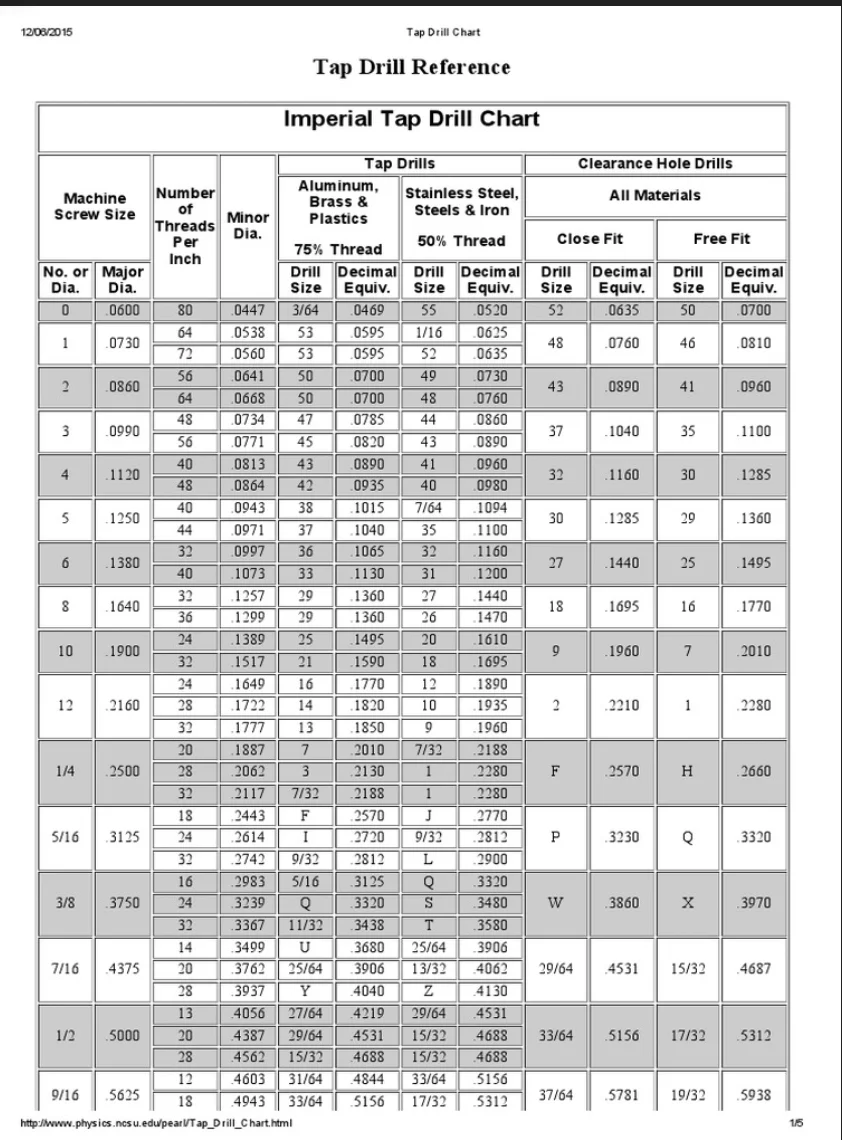
Hey folks, quick question. I've been staring at a tap and drill chart and got kinda confused.
Why does it say to use a #25 drill bit for a 10-24 screw but a #21 bit for a 10-32? The bolt diameter's the same, right? How come the drill sizes are different?
Would love some insight so I can get back to my project.
Why does it say to use a #25 drill bit for a 10-24 screw but a #21 bit for a 10-32? The bolt diameter's the same, right? How come the drill sizes are different?
Would love some insight so I can get back to my project.

 Even tho the bolt size's the same, the threads per inch are different. 10-24's got fewer, thicker threads so it needs a smaller hole (#25). The 10-32's finer threads mean a bigger hole (#21) to let it cut in clean. Take note of it so you won't forget. Or double check because I might have interchanged it AHAHAHA that's how confusing it is.